Review: Hand Drawing Christmas Icons for Holiday Stitching
As a designer who spends more time at the hoop than under the mistletoe, I approach every new machine embroidery design with a critical eye. It is not enough for a file to look cute on a screen; it must survive the tension of the frame, the pull of the needle, and the scrutiny of a paying customer. Recently, I spent some time evaluating the Hand Drawing Christmas Icons or Elements collection to see if it holds up for real-world embroidery project applications. This isn't just a gallery walk-through; this is a practical assessment of how these Illustrations translate from digital design assets to tangible, stitched goods.
The Aesthetic: Whimsy Meets Precision
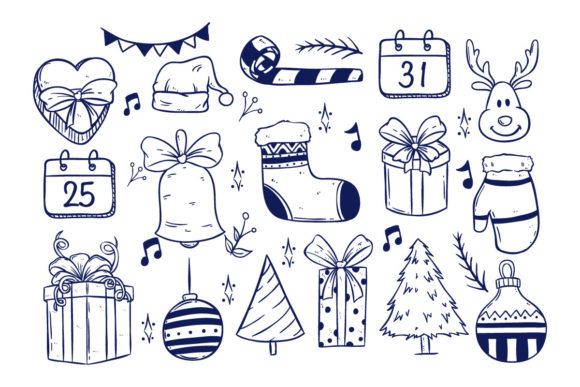
My first impression of the Hand Drawing Christmas Icons or Elements set was the distinct mood it establishes. Unlike the rigid, geometric vectors often found in standard libraries, these designs carry a organic, sketched quality. The lines feel fluid, mimicking the imperfection of a human hand, which is exactly what makes them so appealing for the current market trend toward "handmade" aesthetics. For an Etsy seller or boutique owner, this visual personality is gold. It suggests warmth and personal touch, qualities that resonate deeply during the holiday season.
The layout of the icons varies, offering a mix of standalone motifs and clusterable elements. Whether you are looking at a simple holly sprig, a stylized ornament, or a whimsical winter creature, the detail level strikes a balance. There is enough intricacy to look professional, but not so much density that it becomes a bird's nest of thread. This versatility allows the digital embroidery file to work across different scales, provided you respect the limits of your machine and fabric.
Real-World Application: The Tote Bag Test
To truly understand the value of these icons, I simulated a common scenario: preparing a custom order for a local coffee shop needing branded holiday embroidery on canvas tote bags. Canvas is a forgiving yet textured fabric, making it a great testing ground. I selected a few of the larger icons from the Hand Drawing Christmas Icons or Elements collection to create a festive border design.
The stitching process revealed how well the stitch density was programmed. On the canvas, the fill stitch areas laid down smoothly without excessive puckering, while the running stitch outlines maintained their "sketched" integrity without breaking up. The result was a finished product that looked intentional and high-end. Customers are likely to react positively to this style because it avoids the sterile look of mass-produced corporate logos. Instead, it feels like a personalized gift or a limited-edition small shop product.
Beyond totes, I can easily envision these elements working beautifully on sweatshirt embroidery projects. The softer lines complement the cozy texture of fleece or French terry cloth. For baby embroidery, the gentle curves of these icons are perfect for onesies or nursery blankets, avoiding the harsh, sharp angles that can sometimes feel too industrial for infant wear.
Navigating Fabric Challenges and Hoop Limits
While the designs are robust, they are not without their constraints. As with any embroidery file, context matters. If you plan to use these on stretchy fabrics like thin jersey knits, you must be vigilant with your stabilizer choice. The sketch-like nature of the lines means that if the fabric shifts even slightly, the "hand-drawn" illusion breaks, and the design looks sloppy rather than artistic.
Similarly, caution is needed when working with very small hoop sizes. Some of the more detailed icons in the Hand Drawing Christmas Icons or Elements set may lose definition if scaled down too aggressively. Tiny corners and fine satin stitch details can merge together if the thread thickness overwhelms the design. I recommend testing the design on scrap fabric first, specifically checking how the smallest elements render at your intended size.
Dark fabrics present another consideration. Since these are line-heavy illustrations, ensure you have high-contrast thread colors. A dark grey thread on a black sweatshirt might look sophisticated in a mockup, but in person, the stitching clarity could vanish. Always compare light and dark fabric backgrounds before committing to a production run. Additionally, curved surfaces like caps require careful hooping; the distortion on a structured cap can warp the organic lines of these icons, so a center placement is usually safer than side placements for this specific style.
Commercial Viability and Brand Consistency
For creative entrepreneurs and craft business owners, the ultimate question is: does this design sell? The answer lies in the perceived value. Products featuring the Hand Drawing Christmas Icons or Elements exude a level of craftsmanship that justifies a higher price point. Whether you are creating embroidered patches for jackets, decorating aprons for a bakery, or designing pillow covers for home decor, the unique aesthetic helps your brand stand out in a saturated market.
Visual appeal directly influences buyer engagement. In an online store, where customers cannot touch the handmade product, the texture and dimension captured by these stitches become your primary sales tool. Using these designs in printable mockups can effectively communicate the quality of your work. However, professionalism is key. Ensure that your custom apparel or accessories maintain brand consistency. If your shop usually sells bold, block-letter designs, suddenly introducing these whimsical sketches might confuse your audience unless it is part of a deliberate seasonal collection.
Essential Designer Notes for Success
Before launching into full production with Hand Drawing Christmas Icons or Elements, here are my practical recommendations based on this review:
- Test First: Always stitch a sample on the exact fabric you intend to use. Fabric texture dramatically alters how the "sketch" lines appear.
- Check Licensing: Verify the license terms before selling finished items or digital products. Not all files allow for unlimited commercial use.
- Stabilizer Strategy: Match your stabilizer to the fabric weight. Heavy cut-away stabilizers might be necessary for stretchy knits to preserve the design's shape.
- Thread Contrast: Experiment with variegated threads for a truly hand-painted look, but stick to solid, high-contrast colors for maximum readability on busy fabrics.
- Inspect Details: Zoom in on your machine's preview to check for potential jump stitches or dense areas that might need manual editing.
- Hoop Confirmation: Confirm the required hoop size for each icon. Do not force a large design into a small hoop by scaling it down beyond its recommended limit.
In conclusion, the Hand Drawing Christmas Icons or Elements collection is a strong contender for designers looking to add a touch of artisanal charm to their holiday offerings. It bridges the gap between digital precision and analog warmth. While it requires thoughtful application regarding fabric choice and sizing, the resulting finished product offers a level of sophistication that customers love. For those willing to put in the prep work, these designs can elevate a standard embroidery project into a cherished keepsake.